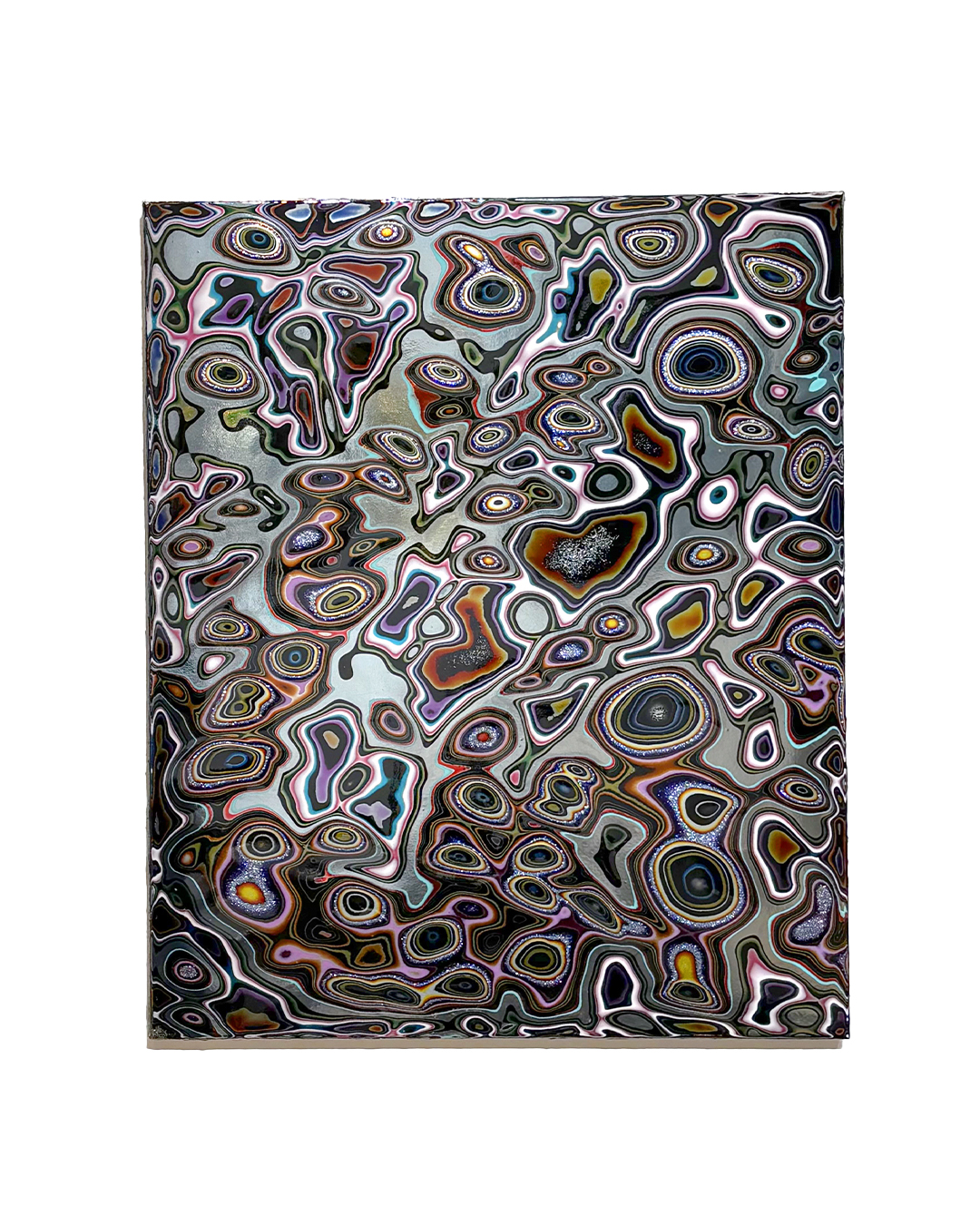

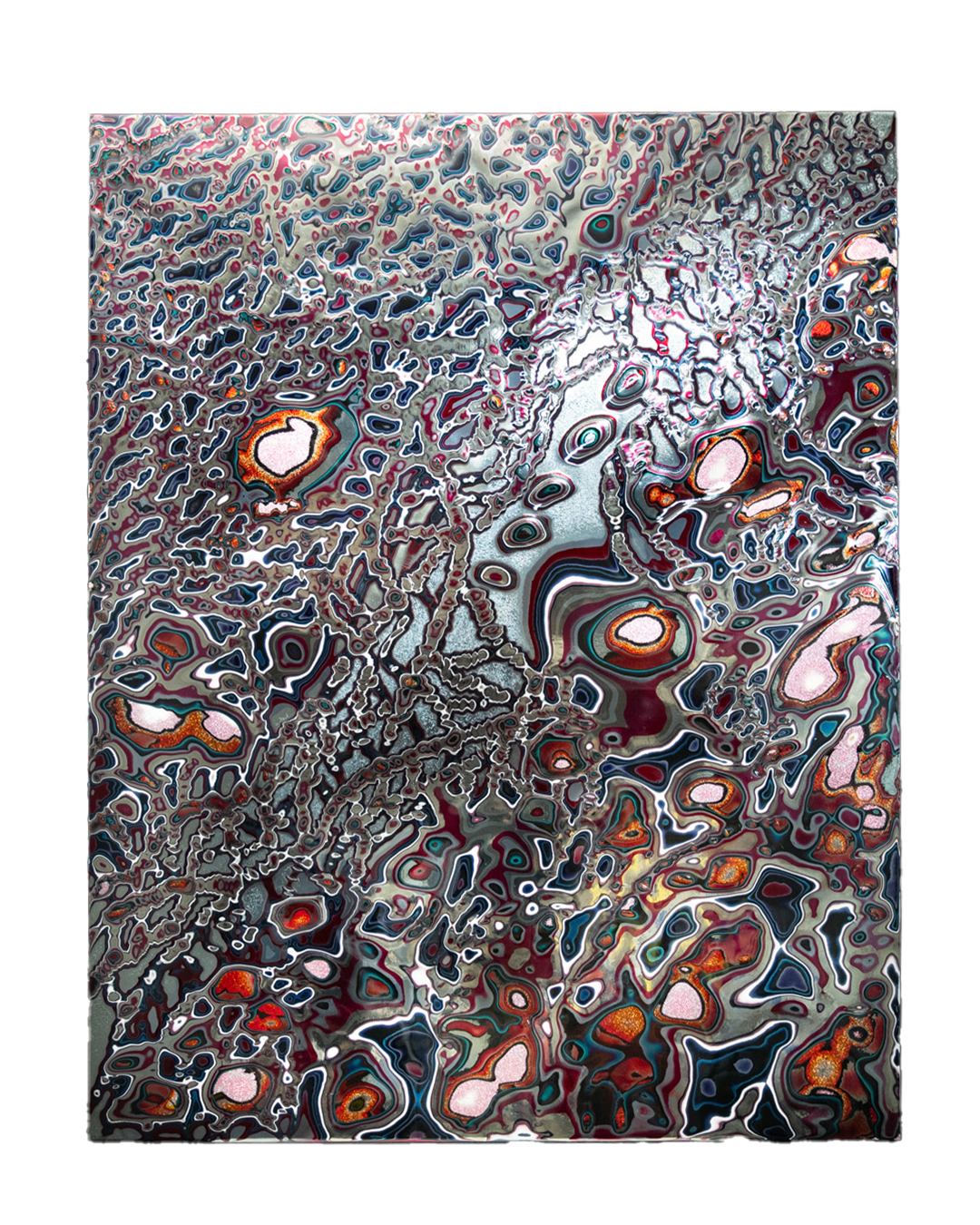
HAZE / F50号
¥11,000,000 (tax incl.)
サイズ : F50号 / 1167×910mm
重さ : 6.5kg
材質 : 木製キャンバス
アーティストからの言葉:
絵画の表面に不可逆的な差異を刻み込み、絵画を光の受動的な支持体から反射と発光を孕む場へと変容させる。
[ UNDULATION — 光学的地層としての絵画 ]
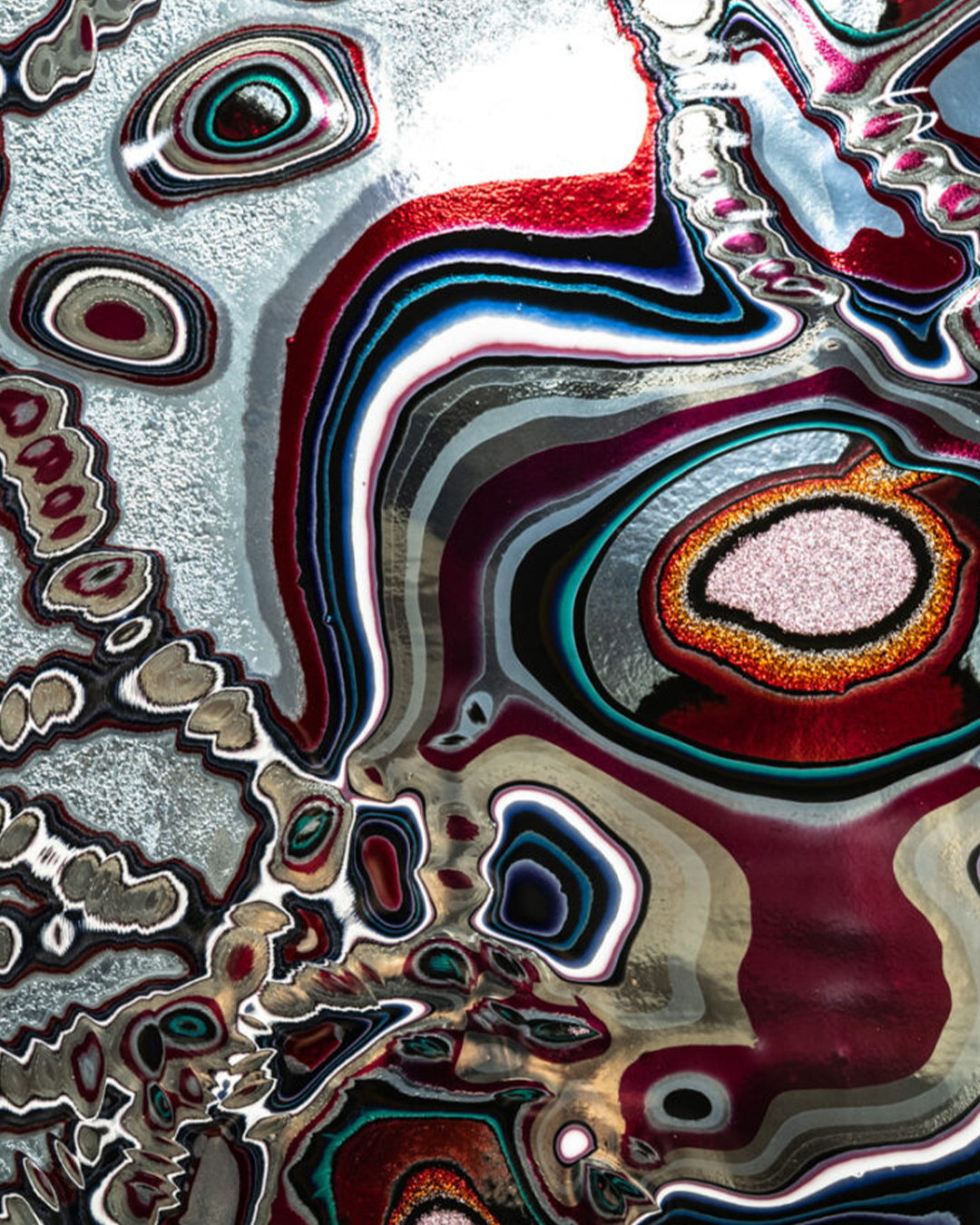
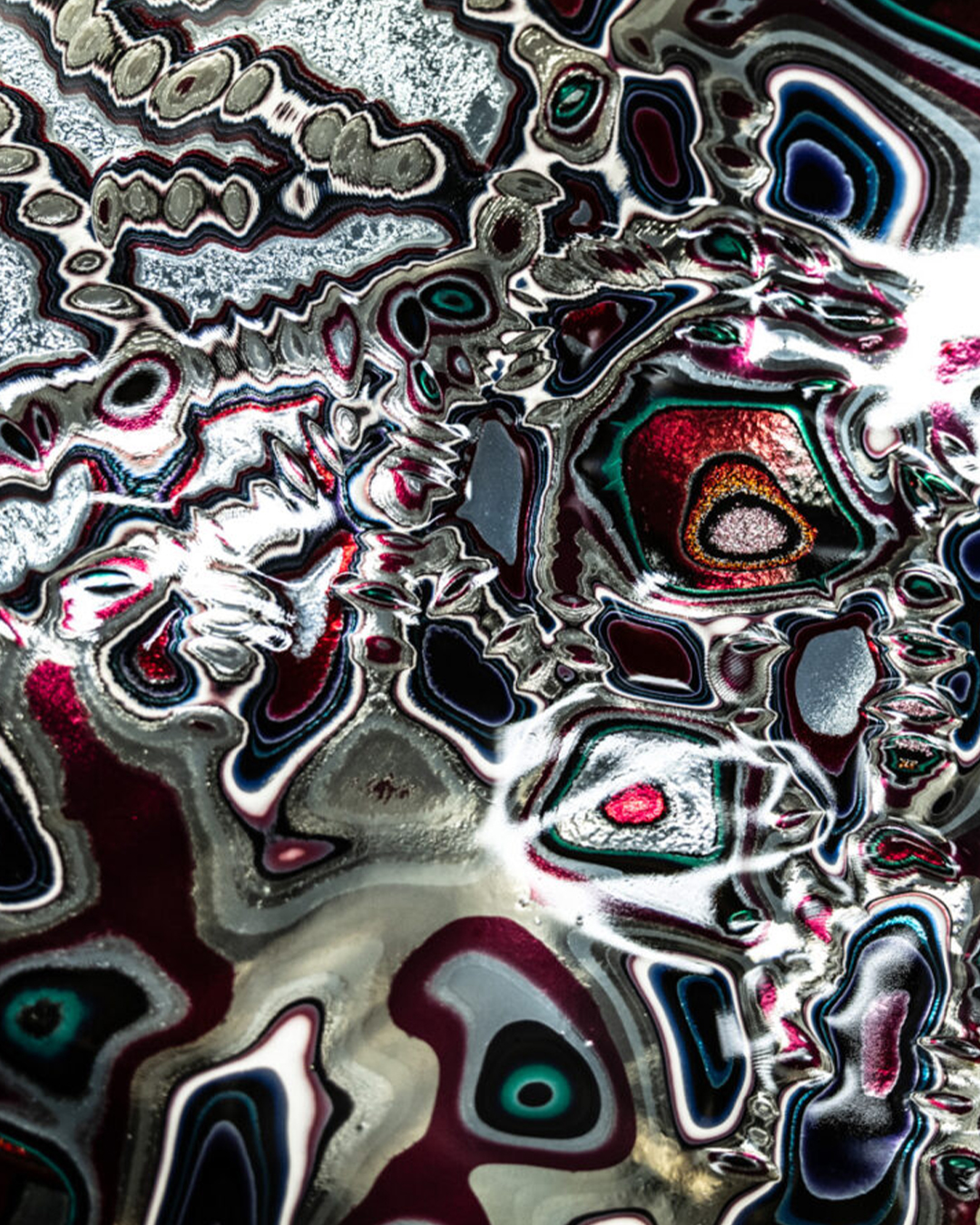
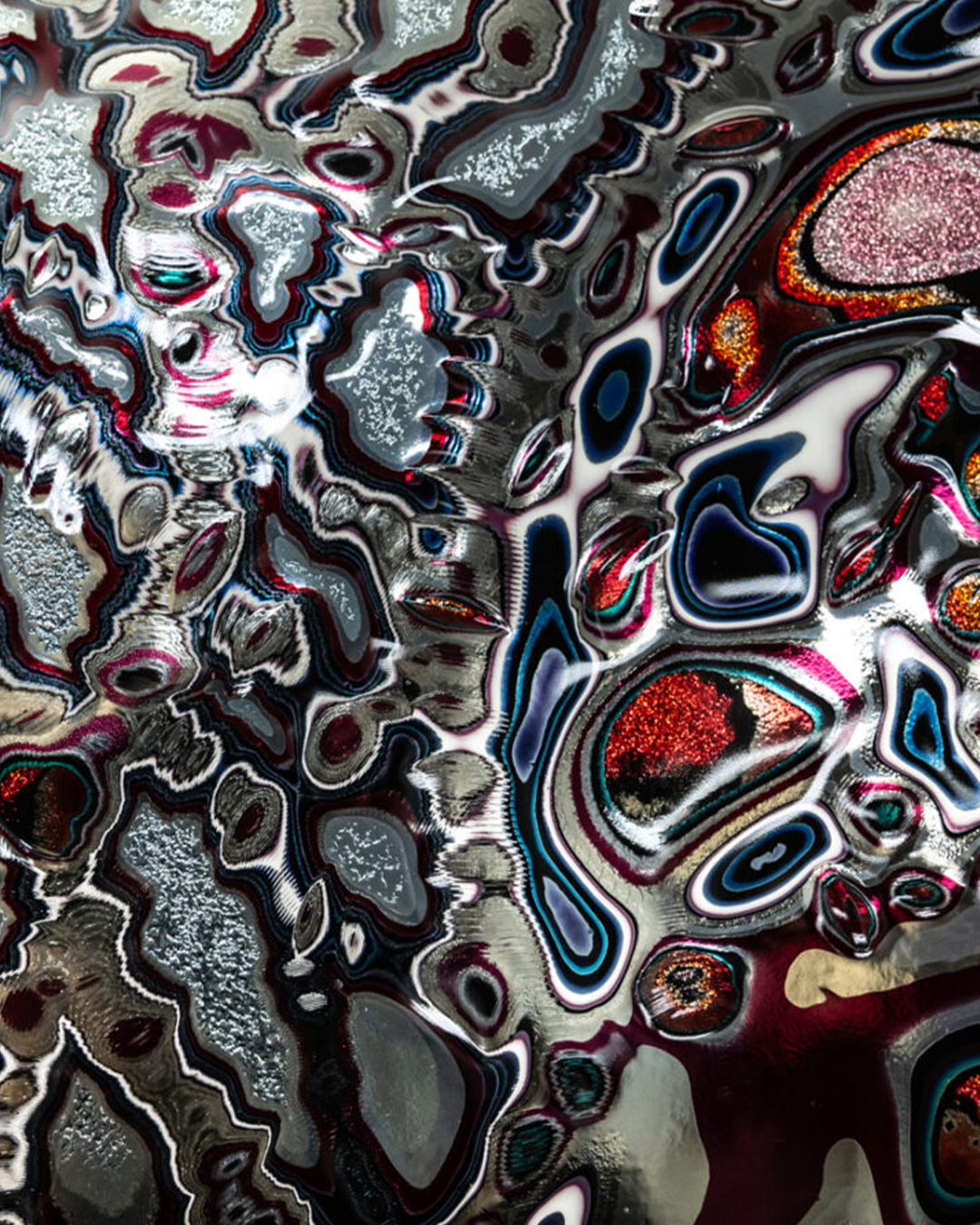
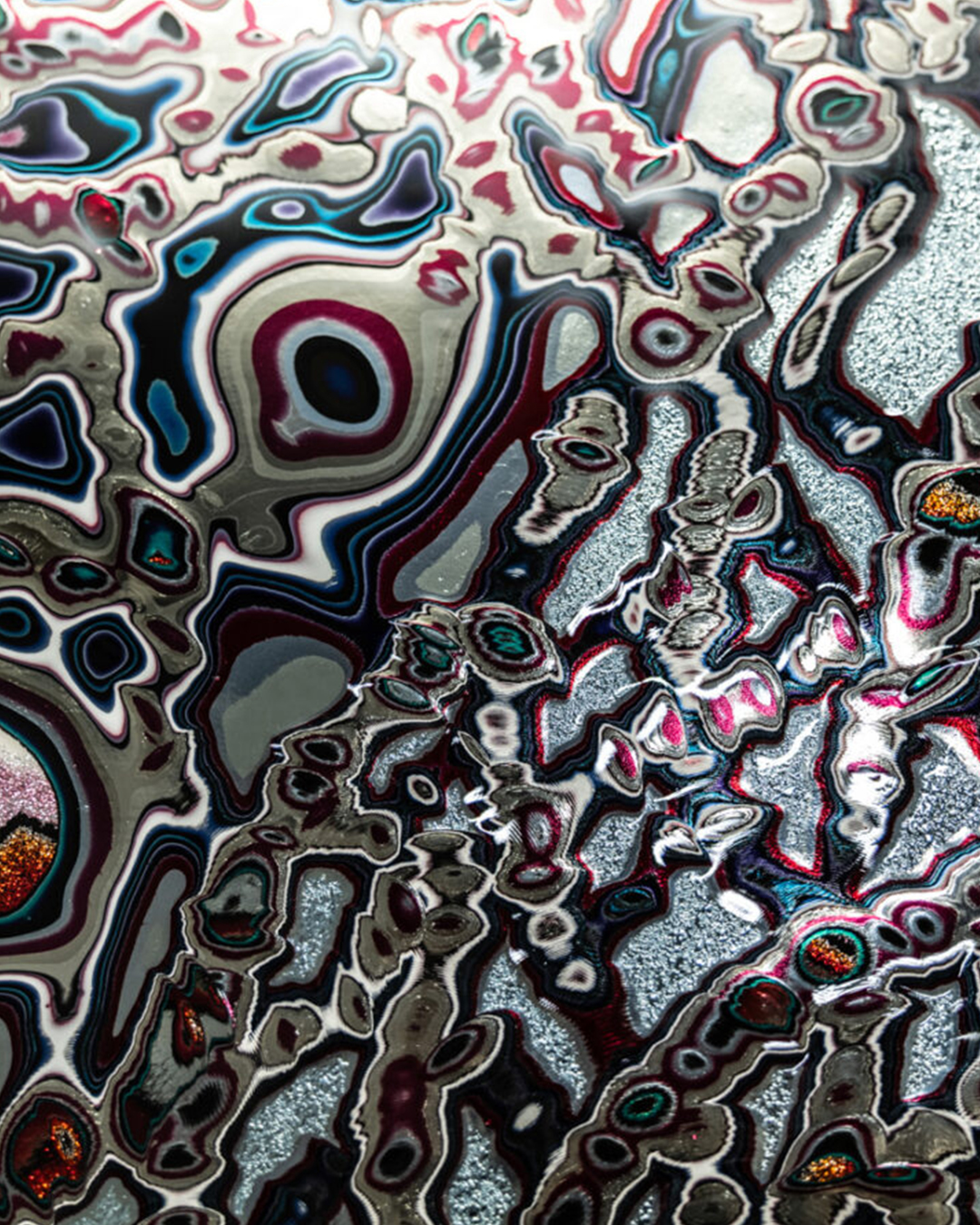
本作品は、クワイ華による UNDULATION の新たな到達点である。木製キャンバスという本来は光を吸収する支持体の上に、88回に及ぶ塗装を重ね、さらにその中層からナノ銀を主軸とする特殊な銀の塗膜を複数層構築している。銀の層は単なる装飾ではない。それは画面内部に光を呼び戻すための反射層であり、色彩を奥から発光させるための光学的基盤である。通常、絵画の色は表面に置かれる。しかしこの作品において色は表面だけに存在していない。銀の下に沈み、銀の上に透過し、研削によって断面として露出する。つまり色彩は平面上のイメージではなく、塗膜内部に堆積した時間として存在している。
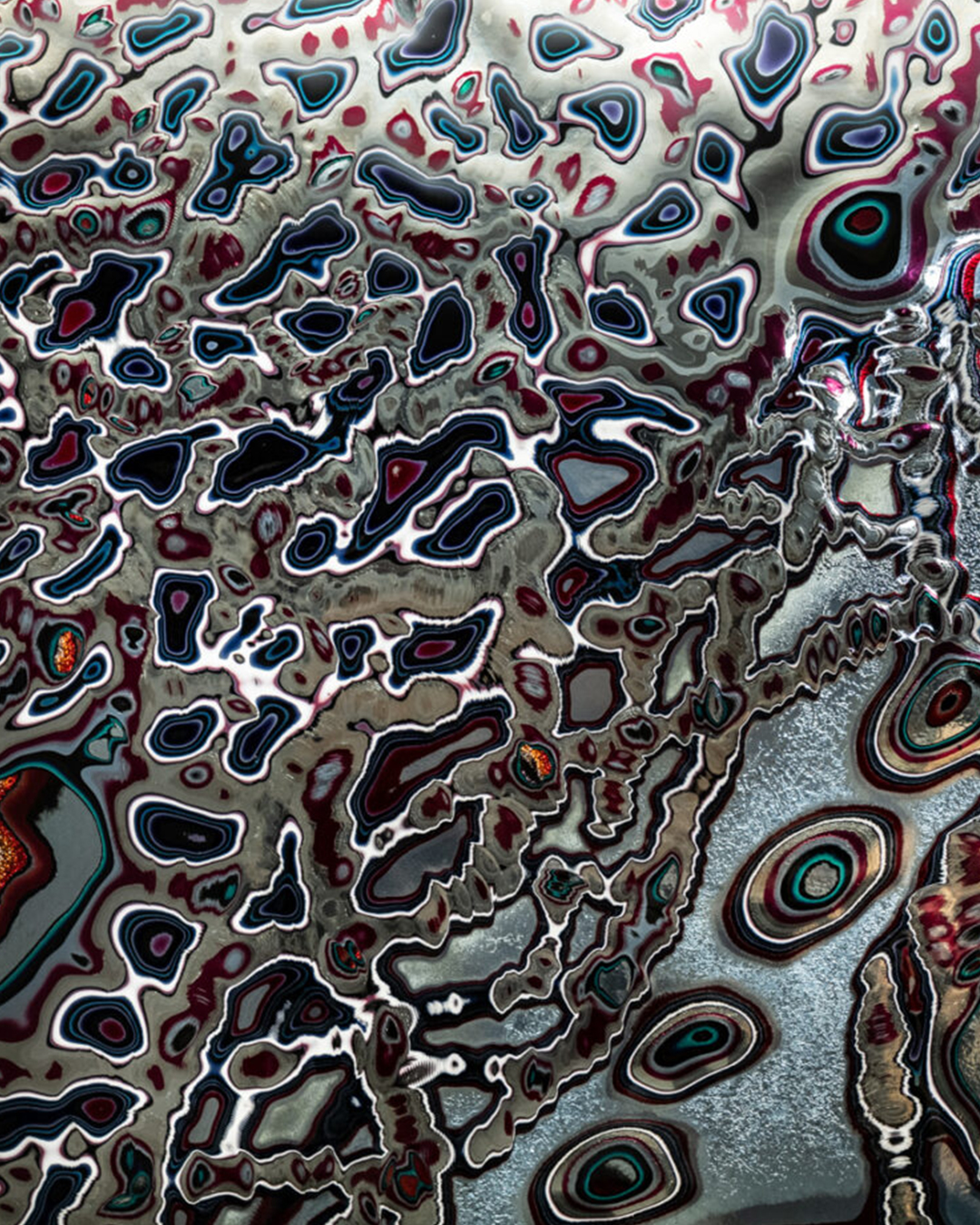
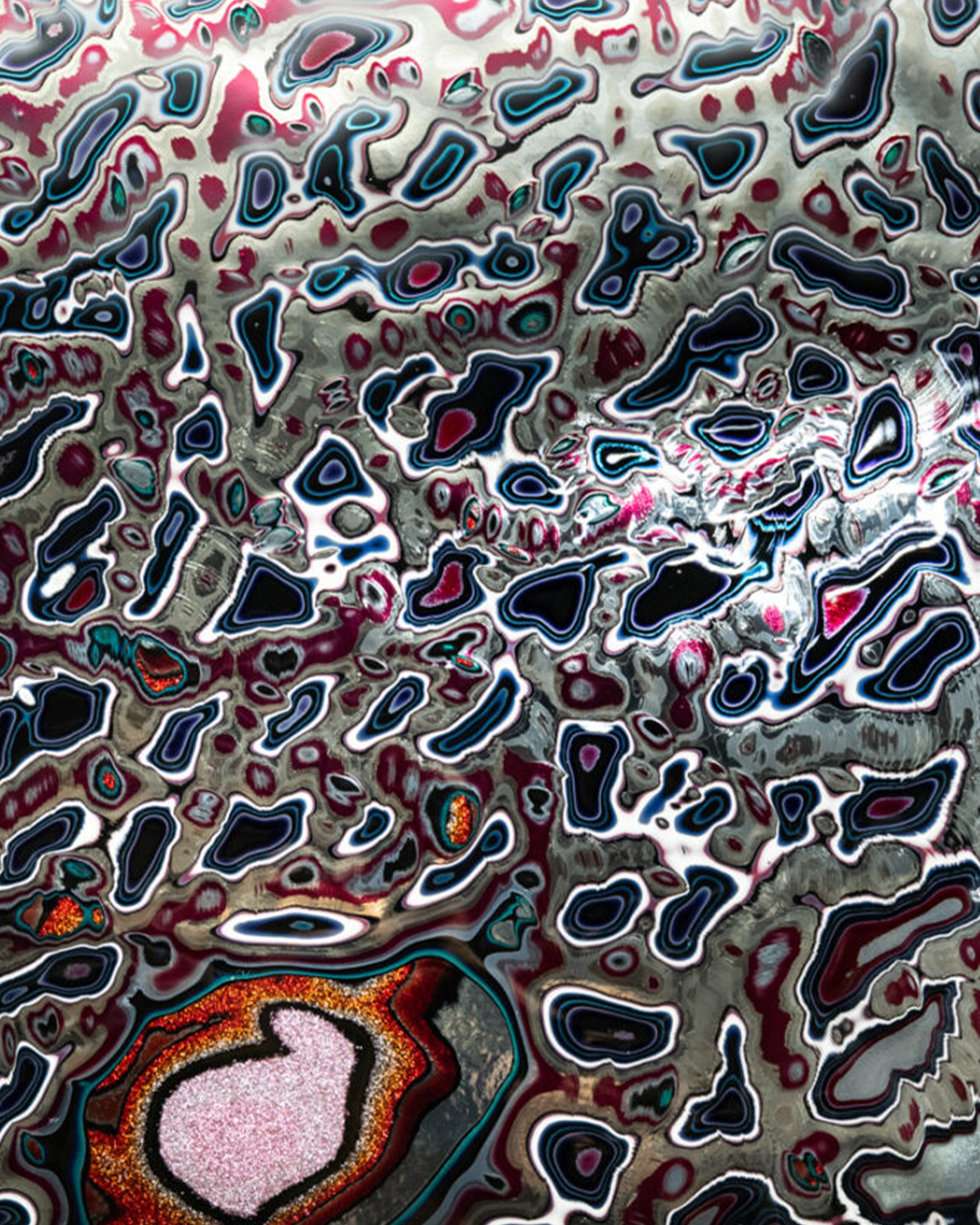
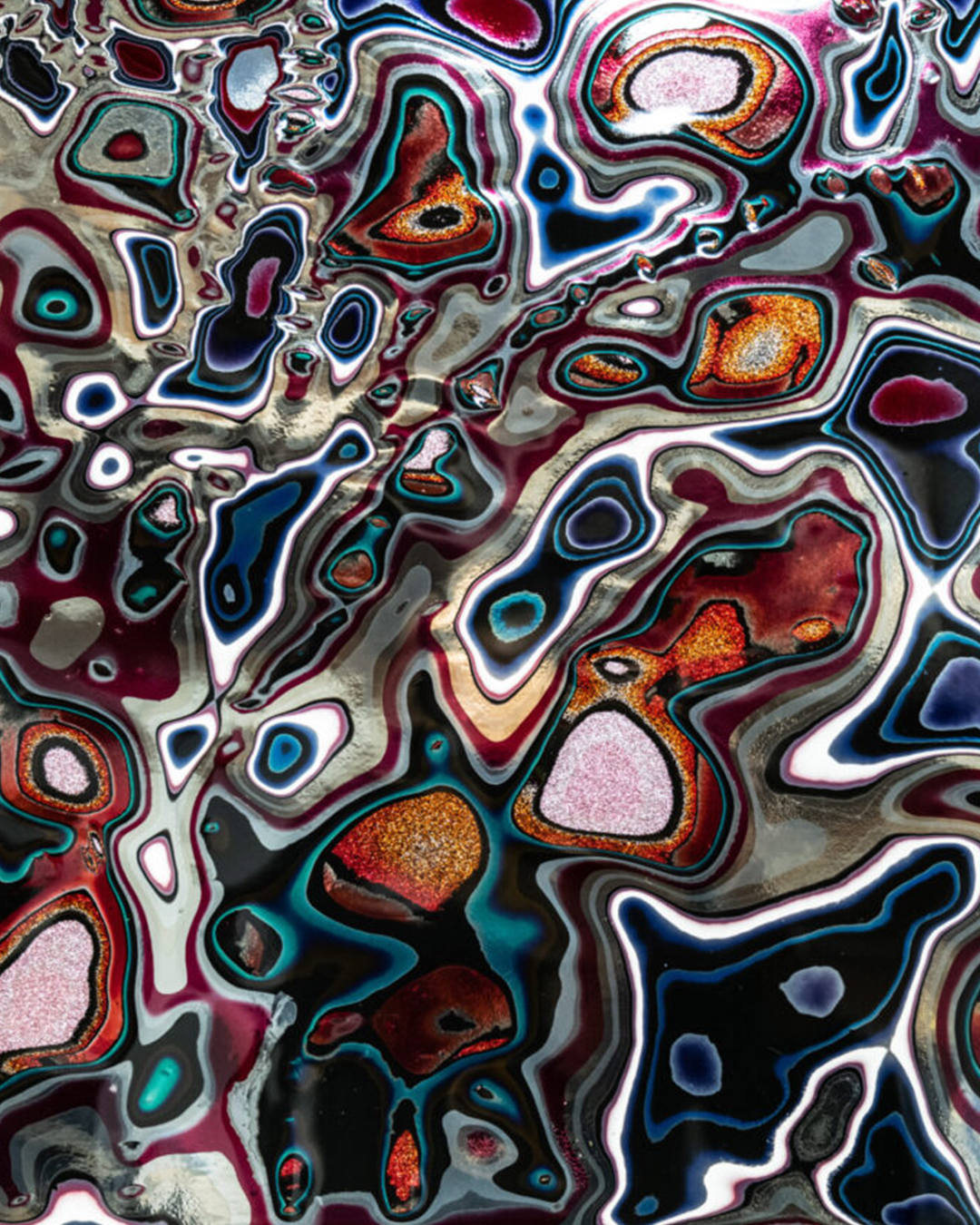
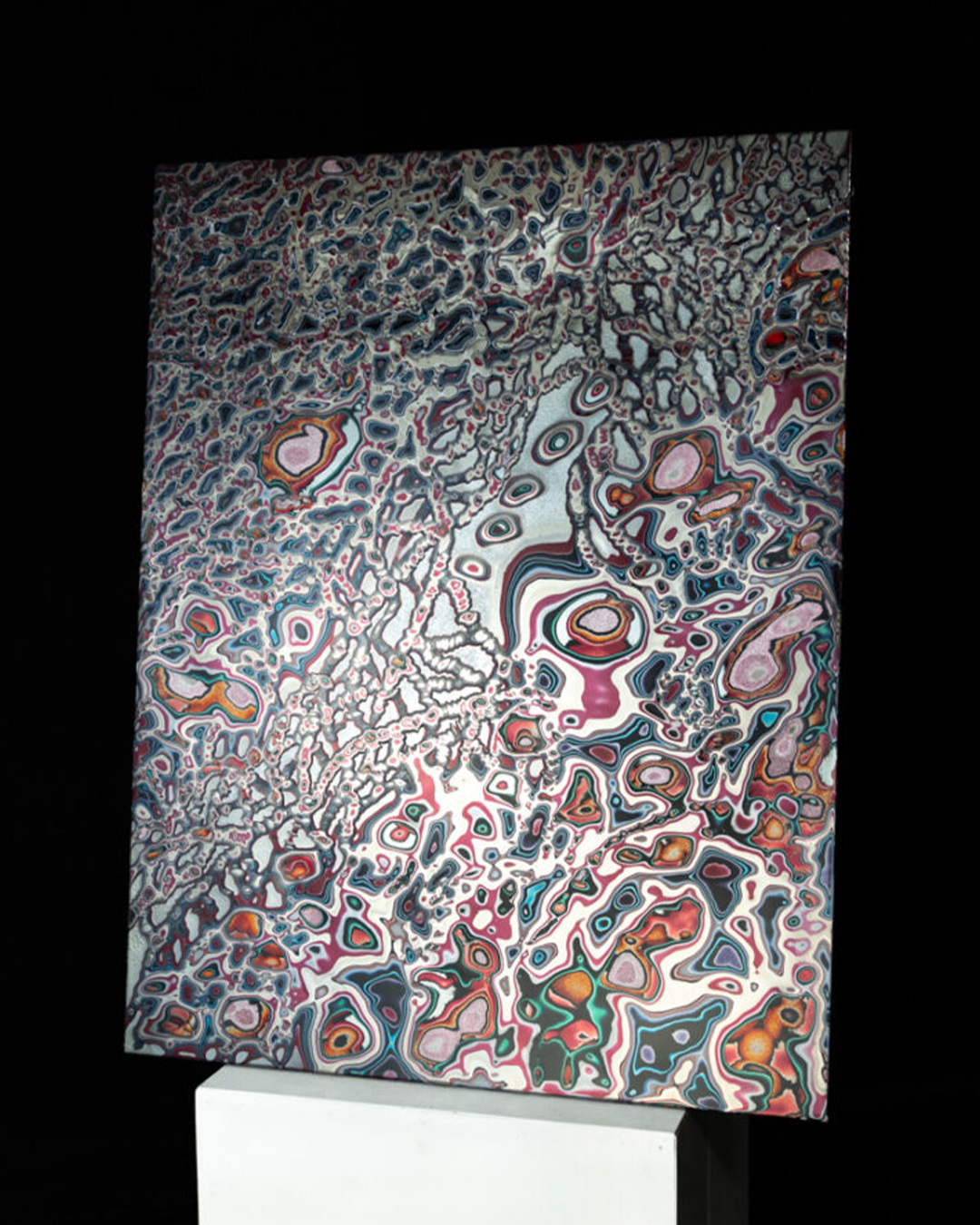
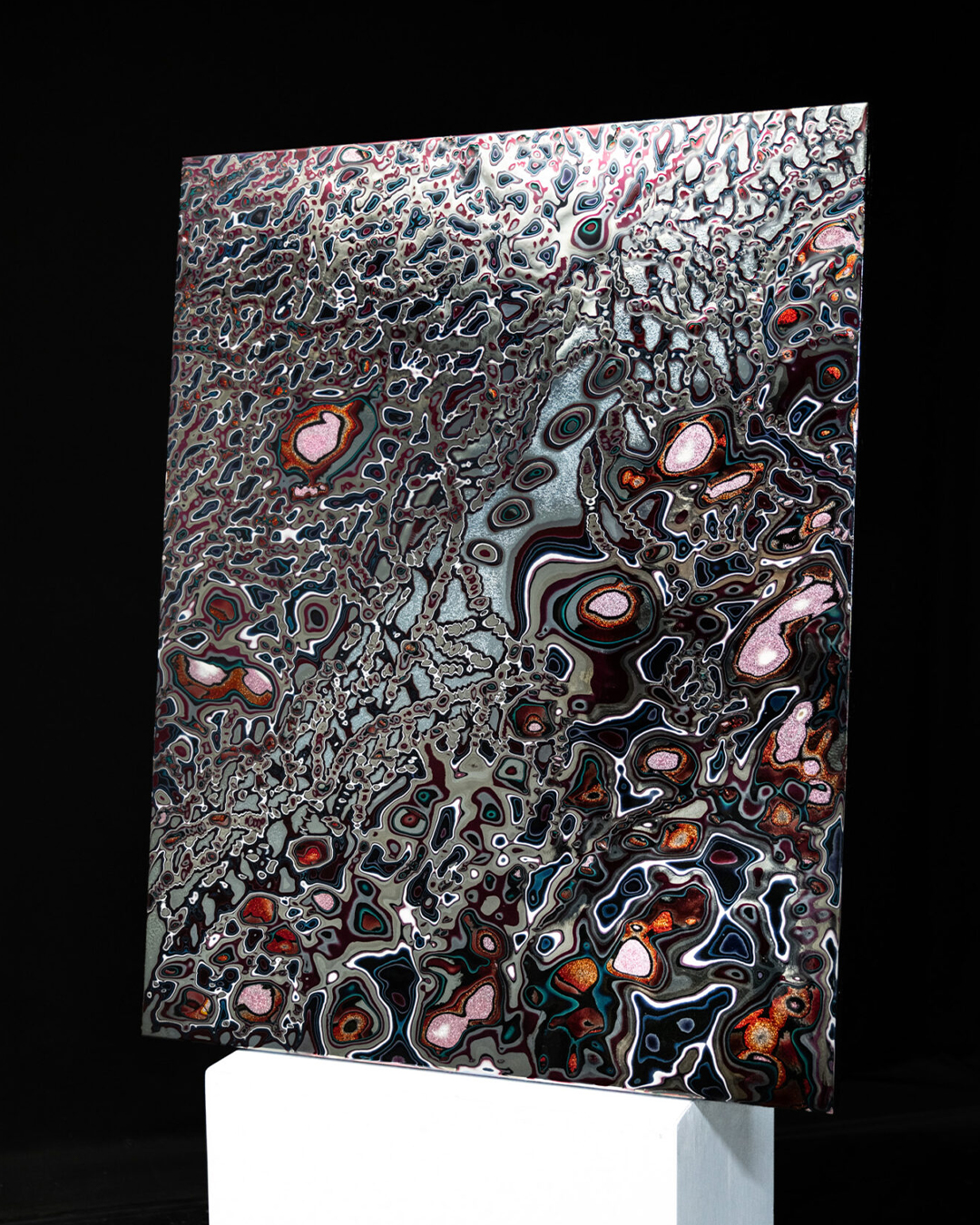
制作過程では、塗装 / 乾燥 / 反射層の形成 / キャンディーカラーの重層 / そして特殊工具による研削が繰り返される。その結果、画面には鉱脈、細胞、液体金属、宇宙的な断面を思わせる複雑な像が現れる。鑑賞者が移動すると銀層と透明色層が光を返し、作品の表情は角度によって変化する。ここで絵画は、静止した画像ではなく、光と視点に反応する物質的な出来事となる。
美術史において、絵画は長く「描かれた表面」として扱われてきた。抽象表現主義は画面全体を解放し、ミニマリズム以後の鏡面作品は空間の反射を作品化し、ライト・アンド・スペースの系譜は光そのものを知覚の対象とした。しかし本作はそれらの文脈を踏まえながらも、鏡面を最終表面としてではなく絵画内部の構造として取り込んでいる。
ここに、本作が内包する [ 不可逆的な差異 ] がある。
不可逆的な差異とは、一度発生した後にはもはや以前の状態へ戻ることのできない決定的な変化を意味する。本作では木製キャンバスは単なる支持体ではなくなり、鏡面は単なる反射面ではなくなり、色彩は単なる表面の装飾ではなくなる。絵画は光を吸収する平面から、光を蓄積し、反射し、再放射する「光学的地層」へと変質している。
この作品は、特殊塗装技術の誇示ではない。 また絵画の表面を単に刷新する試みでもない。 それは絵画が長く信じてきた “表面” という制度を暴き、光・銀・色彩・塗膜の深度によって、その常識を内側から破壊する行為である。見る者は、ここで一枚の絵を見ているのではない。88層の時間 / 銀の反射 / 透明色の発光 / 削り出された断面、そして鑑賞者自身の視点が交差する、唯一無二の現象を目撃している。
Size: F50 / 1167×910mm
Weight: 6.5kg
Material: Wooden canvas
Artist Statement
Inscribing Irreversible Difference onto the Surface of Painting, Transforming It from a Passive Support of Light into a Site of Reflection and Emission.
UNDULATION: Painting as an Optical Stratum
This work represents a new culmination within UNDULATION, the ongoing artistic practice of Kuwai Hana. Upon a wooden canvas, a support traditionally understood as an absorber of light, the artist has applied eighty-eight successive layers of paint. Embedded within these layers are multiple strata of specialized silver coatings, centered on nano-scale silver particles.
These silver layers are not decorative embellishments. They function as reflective structures that return light into the body of the painting itself, forming an optical foundation through which color appears to radiate from within.
In conventional painting, color resides upon the surface. In this work, however, color exists beyond the surface. It sinks beneath silver layers, passes through them, and is revealed again through processes of abrasion and excavation. Color thus ceases to be a mere image spread across a plane and instead becomes accumulated time embedded within the stratified body of the painting.
The work emerges through a repeated cycle of painting, drying, constructing reflective layers, applying translucent candy-color coatings, and carving the surface with specialized tools. Through this process, the picture plane develops intricate formations that evoke mineral veins, cellular structures, liquid metal, and cosmic cross-sections.
As viewers move before the work, the silver strata and transparent color layers return light differently according to angle and position. Painting is no longer a fixed image. It becomes a material event that responds dynamically to light and perception.
Throughout art history, painting has largely been understood as a painted surface. Abstract Expressionism liberated the entirety of the picture plane. Post-Minimalist mirror works transformed reflected space into artistic material. The lineage of Light and Space shifted attention toward light itself as an object of perception.
While informed by these histories, this work departs from them by incorporating the reflective surface not as a final exterior condition, but as an internal structure embedded within the painting itself.
Herein lies what the work contains:
Irreversible Difference
Irreversible difference refers to a decisive transformation that, once enacted, can never return to its previous state.
Within this work, the wooden canvas ceases to be a mere support. The mirror-like silver layer ceases to be merely reflective. Color ceases to function as surface ornamentation.
Painting is transformed from a flat plane that absorbs light into an optical stratum that stores, reflects, and re-emits light.
This work is not a demonstration of specialized coating technology, nor is it simply an attempt to renew the appearance of painting. Rather, it exposes and challenges the long-standing institution of the pictorial surface itself. Through the depth of light, silver, color, and accumulated layers, it destabilizes that convention from within.
The viewer is not merely looking at a painting.
They are witnessing a singular phenomenon where eighty-eight layers of time, the reflection of silver, the luminosity of transparent color, excavated cross-sections, and the viewer’s own shifting perspective converge into a unique and unrepeatable experience.